
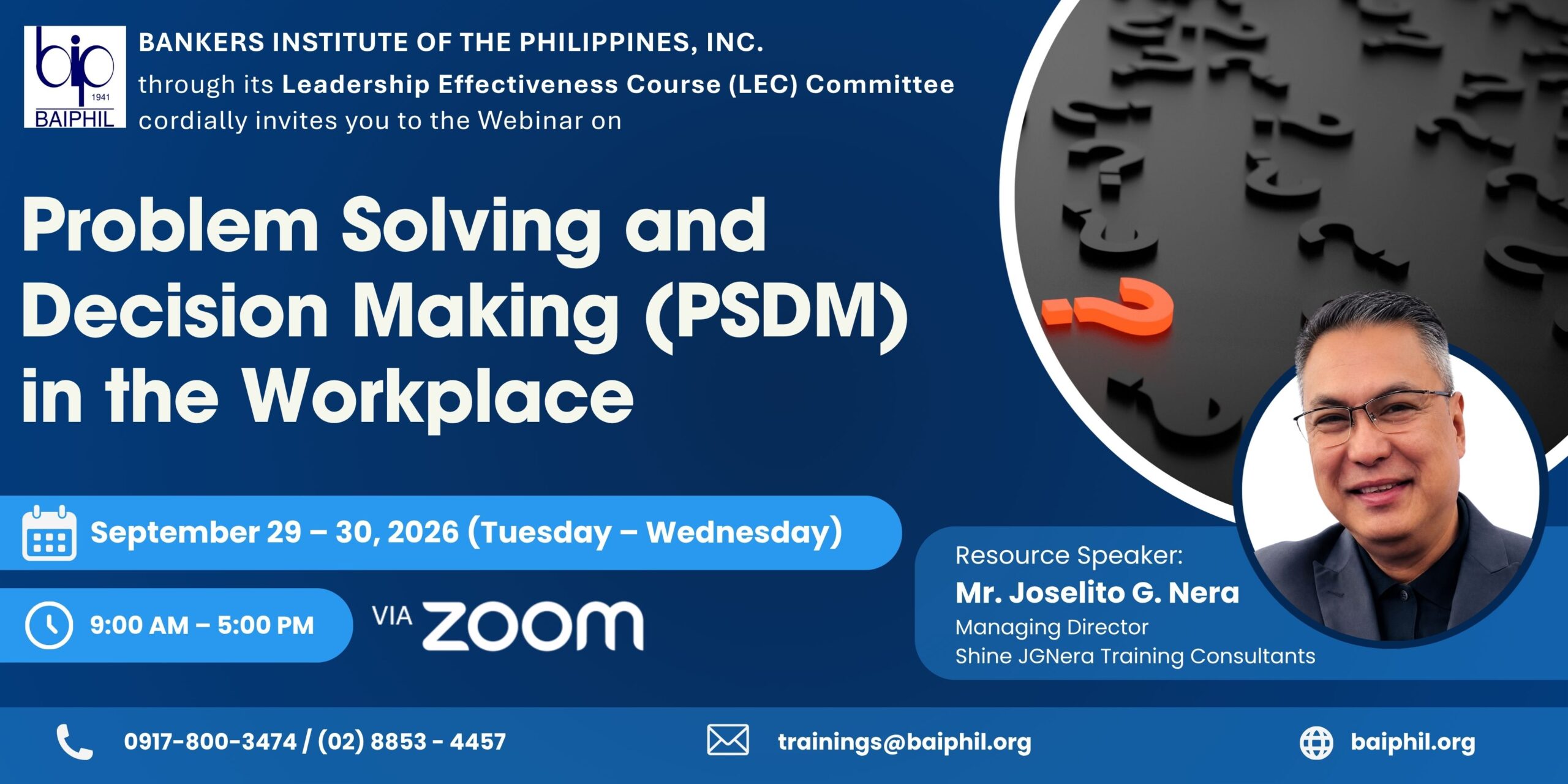
Description
Problems and decisions are part of day-to-day life in any organization. Equipment break down. Sales performance does not meet target. Customers complain. Work gets delayed. Collection extends beyond due date. And people violate company rules. As Murphy’s Law states, “anything that can go wrong, will go wrong” However, most managers and supervisors solve workplace problems using quick fix, short-term solutions based on limited experience and data. The results are problems that recur and often get worse, demoralizing the whole organization. Organization leaders of today need a good balance of creative and critical thinking to produce workable, effective and innovative solutions. And to choose the “best” solution requires a positive mindset and skillful use of tools and techniques in decision-making. Without sound decisions, there can be no real practice of leadership. This program aims to boost the problem solving and decision making skills as well as the creative thinking and critical thinking abilities of your workforce. “Together We SHINE!”
What We Will Achieve in this Program Our Learning Objectives:
At the end of the Two (2)-day program, participants must be able to:
- display a sense of urgency and decisiveness in attending to workplace problems and decisions
- exhibit a balance of creativity and critical thinking in dealing with workplace problems and decisions
- perform the five (5) steps in analyzing and prioritizing workplace concerns, conduct the four (4) steps in Problem Analysis in determining root causes of problems and developing solutions options
- apply the seven (7) steps in Decision Analysis in determining the best course of action among available alternatives
- execute the four (4) steps in Potential Problem Analysis in anticipating and dealing with potential threats to a decision / solution
- provide solutions to problems and make the needed decisions using a variety of sound tools and techniques
Our Learning Experience
The Program Modules
Module # 1: GEARING UP FOR PROBLEM SOLVING AND DECISION MAKING
- Problem Solving & Decision Making: A Reality in Managerial and Supervisory Work
- A Shared Definition of “Problems” and “Concerns”
- The Right Mindset in Solving Problems and Making Decisions
- Common Pitfalls in Problem Solving & Decision Making
- The SAPADAPPA Model: A Systematic Approach in Problem Solving and Decision Making.
Module # 2: CREATIVE vs. CRITICAL THINKING
- Am I Creative or Critical?
- Creative Thinking: Thinking Novel, Big and “Out of the Box”
- Critical Thinking: Logical, Practical and “Best Option” Thinking
- Which One Is A Better Type of Thinking?
- Different Uses of Creative Thinking & Creative Thinking
- Developing Both Types of Thinking
- Creativity Tools: Different Idea Generation Techniques Logical Thinking
- Tools: Different Evaluation Techniques
Module # 3: SITUATIONAL ANALYSIS: CREATING ORDER OUT OF CHAOS
- The Objective of Situational Analysis: Prioritizing the Manager’s Concerns
- Defining “Concerns”: Problems, Decision or Potential Problems
- The Five Steps in Situational Analysis
- Recognizing and Describing Your Concerns in Detail
- Criteria in Prioritizing Concerns
- Knowing the Right Course of Action for the Concern
- Preparing Your Containment Action: Preventing the Concern from Worsening
Module # 4: PROBLEM ANALYSIS: CLOSING THE GAPS
- The Four Steps in Problem Analysis
- Measuring the Problem
- Developing the Problem Statement
- Determining the Root Causes
- Validating the Identified Causes
- Creating Solution Options
Module 5: DECISION MAKING: CHOOSING THE BEST OPTION
- The Steps in Decision Analysis
- Clarifying the Real Purpose of the Decision
- Understanding the Type of Decision Required
- Studying the Context: Factors Surrounding the Decision
- Developing the Criteria Used in Selecting the “Best Choice”
- The Decision’s Impact on “Numbers” and “Intangibles”
- The Time-Cost-Performance Model
- Identifying and Involving the Stakeholders
- Some More Decision-Making Tools:
- Matrices
- Cost-Benefit Analysis
- Decision Trees
- Force Field Analysis: “Barriers” and “Aids”
- Communicating and Implementing the Decision
Module # 6: POTENTIAL PROBLEM ANALYSIS: ANTICIPATING WHAT CAN GO WRONG
- “Potential Problems” = Potential Threats and Risks
- The Purpose of Potential Problem Analysis
- The Steps in Potential Problem Analysis
- Mapping Out the Potential Threats
- Determining the Likely Causes of the Risk
- Preventing the Potential Threats
- Plan B: What To Do When the Potential Threats Occur
Module # 7: PREPARING FOR WORKPLACE APPLICATION
- Post Workshop Activities
- Review and Integration of Major Lessons
- Challenging Your “Comfort Zone” Back in the Workplace
- ACTIVITY: Commitment Building
Methodologies: Program delivery will use any combination of the following methods:
- Structured Learning Exercises (SLEs)
(which will be processed to surface lessons about selected topics) - Interactive Lectures (incorporating Class Discussion and Forums)
- Written Exercises and Workshops (individual or groups)
- Group Discussion
- Role-plays and Simulations
- Assessment (Questionnaires)
- Film Showing
Speaker:
Mr. Joselito G. Nera
Managing Director
Shine JGNera Training Consultants
Schedule:
September 29 – 30, 2026 (Tuesday – Wednesday) 9:00 AM – 5:00 PM
Training Fee:
Member Institution – Php 7,840.00
Non-Member Institution – Php 10,080.00
*VAT inclusive